
A Versatile Mild Salsa
Try this very simple salsa made with guajillo chile peppers, a mild dried chile with a complex fruity flavor. It is one of the most popular chiles in Mexico for making salsas.
In this recipe, the chiles aren’t toasted as they are in many other salsa recipes which allows the flavor of the guajillo to come through.
Don’t like your salsas too hot? This is a good one for you, rich chile flavor but with less burn. This a versatile salsa that goes well with many dishes.
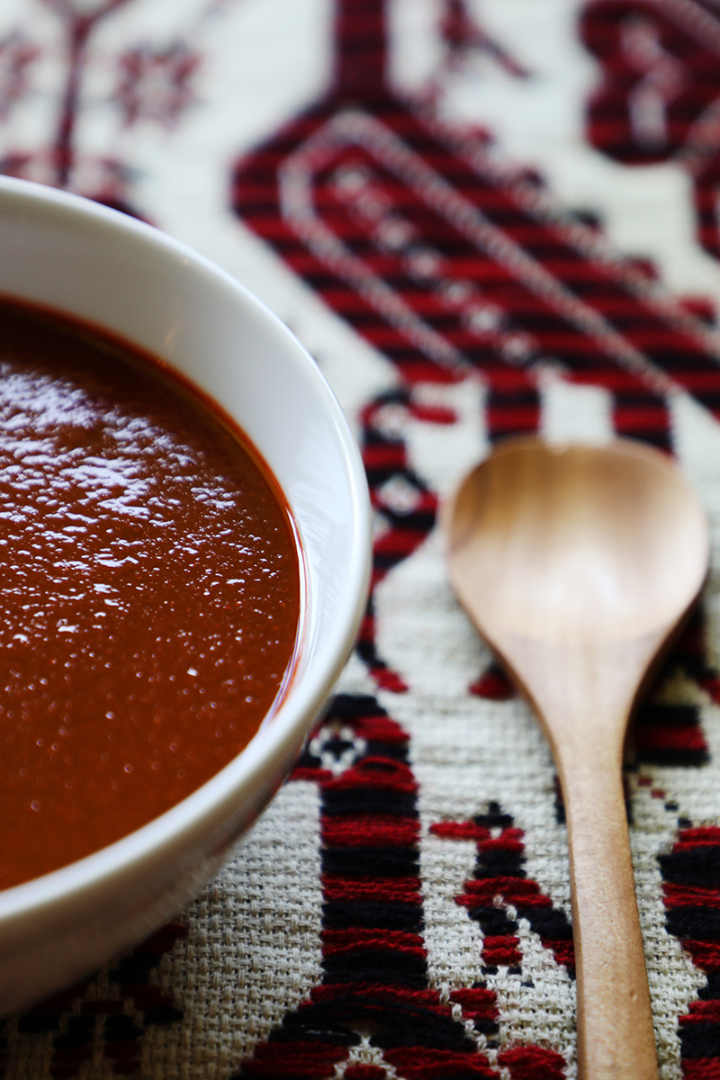
Try this guajillo chile sauce on tacos, enchiladas, chicken, scrambled eggs or on cactus salad.
This type of salsa is typical in the state of Guanajuato. It’s perfect for making enchiladas mineras.
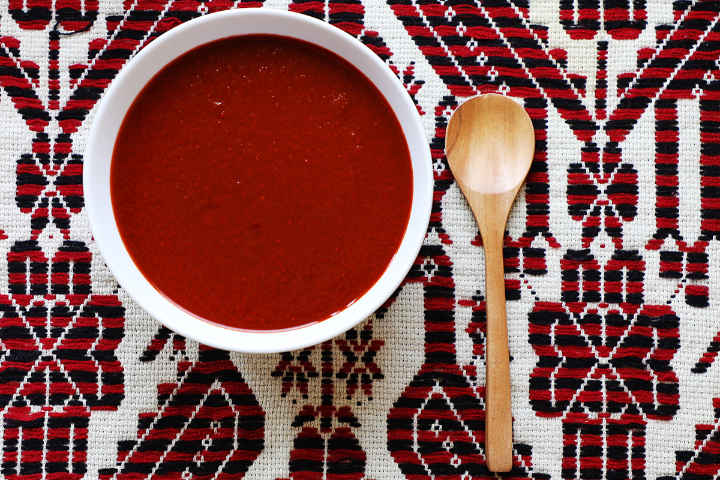
How to Make
Gather your ingredients:
- 16 guajillo chiles, also called chile cascabel ancho
- 4 cloves of garlic
- ¼ cup chopped cilantro
- 4 cups of water
- 2 tablespoons cooking oil
- 1 tsp. salt + as needed
Choosing Guajillo Chiles
Choose peppers that are soft and pliable that have a mild fresh fruity smell. Brittle chiles are stale, lack flavor, and may be bitter. Learn more about how to choose guajillo peppers.
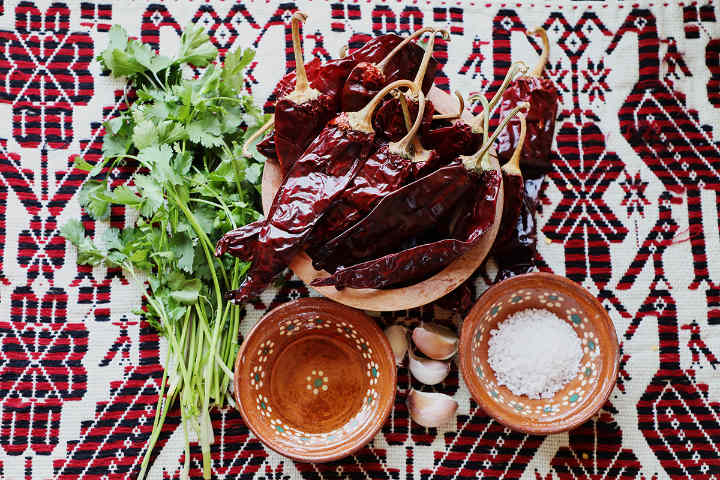
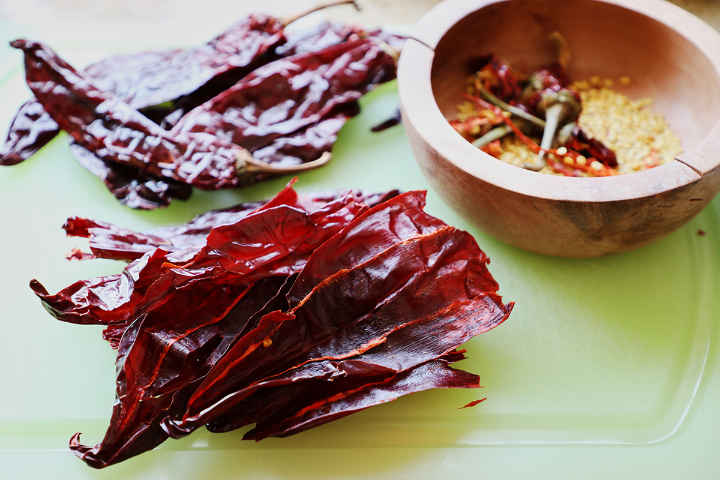
Remove the stems, seeds, and veins from the chiles. Discard.
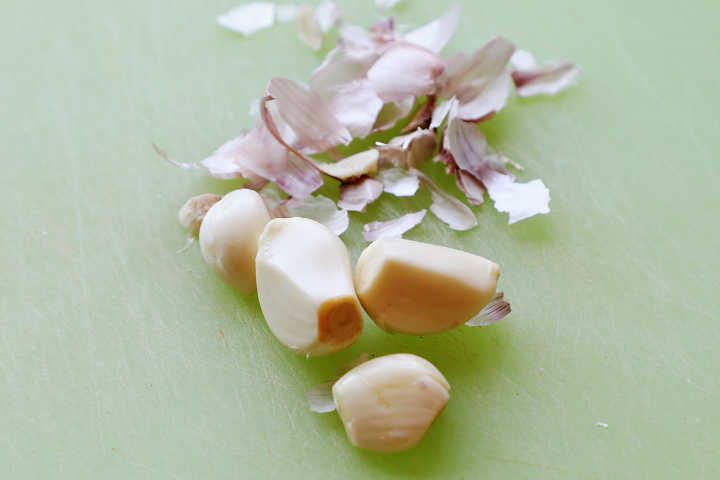
Peel the cloves of garlic.
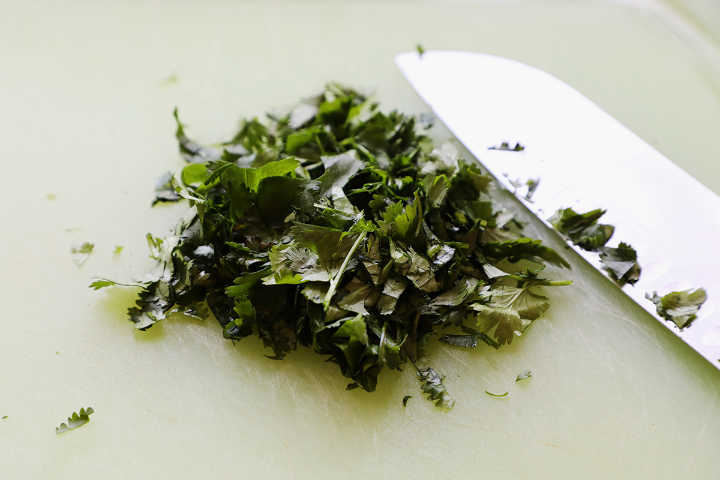
Chop the cilantro. You can use the stems.
Put all the ingredients in a saucepan. Add just enough water to cover the ingredients, about 2 cups.
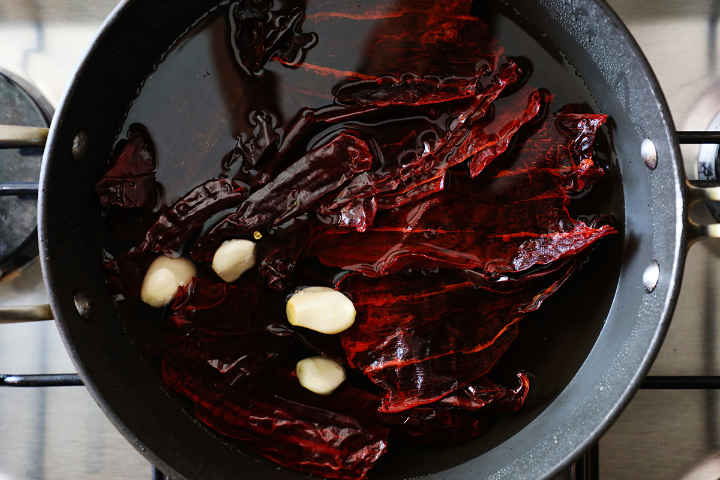
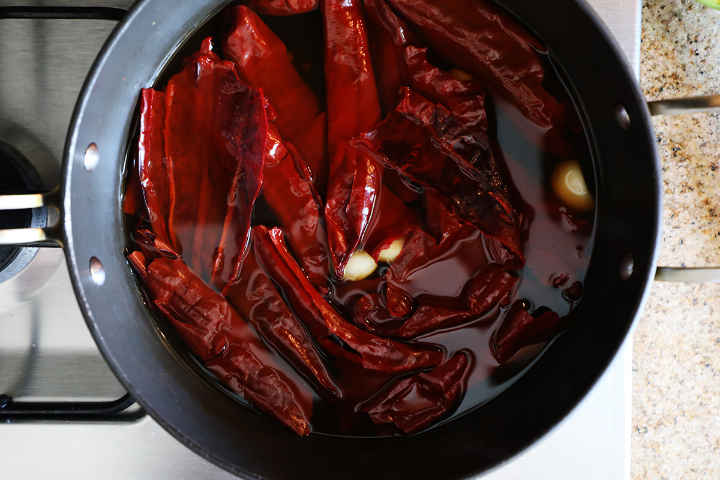
Bring the water to a boil then reduce the heat to low. Simmer for 1 minute then turn off the heat. Allow the ingredients to soak for 15 minutes.
Notice how the chiles have absorbed water and changed color after the have reconstituted.
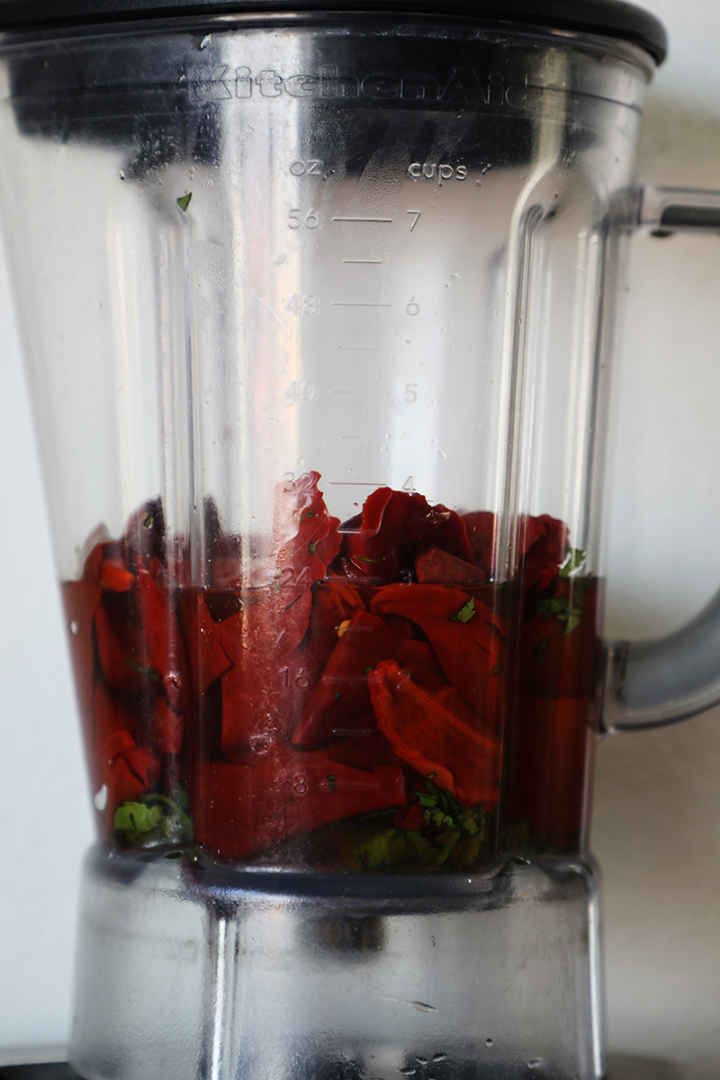
Pour all of the ingredients including 2 cups of the soaking water into the blender.
Blend until smooth, about 2 minutes. Add a little soaking water if needed to blend.
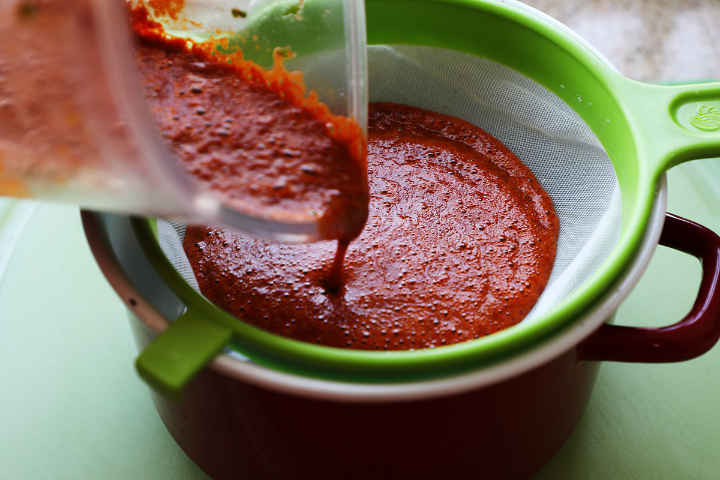
Strain the mixture back into a bowl. Press the remaining pulp firmly with the back of your spoon to release all of the flavor.
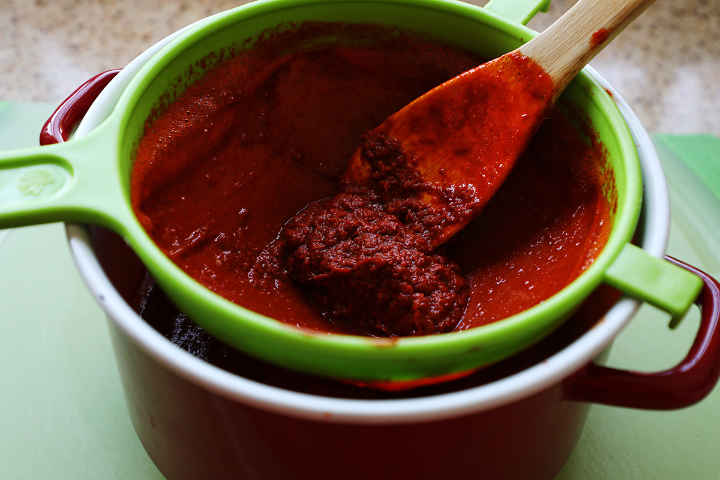
Discard the pulp that remains in the strainer.
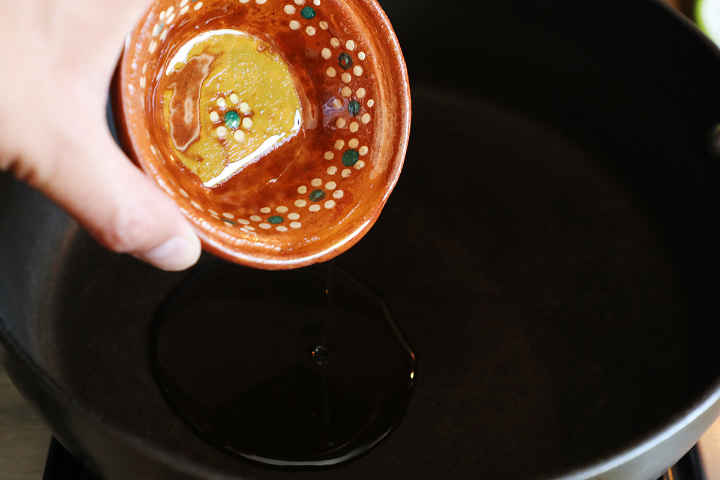
Now it’s time to season the sauce. You do this by frying the base in hot oil. Start by heating a pan to medium-hot then add 2 tbsps. of cooking oil.
Pour the chile base into the hot oil. Add up to 1 cup of soaking water to get the desired consistency.
At this point, the sauce will be a little bit runny and will lightly coat the back of a spoon. It will thicken as it simmers.
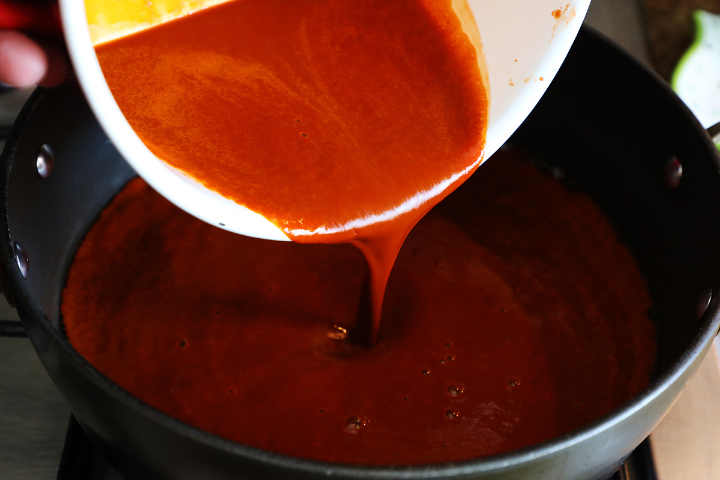
Season with 1 tsp. of salt. At the end of cooking, you can add more salt to taste if needed.

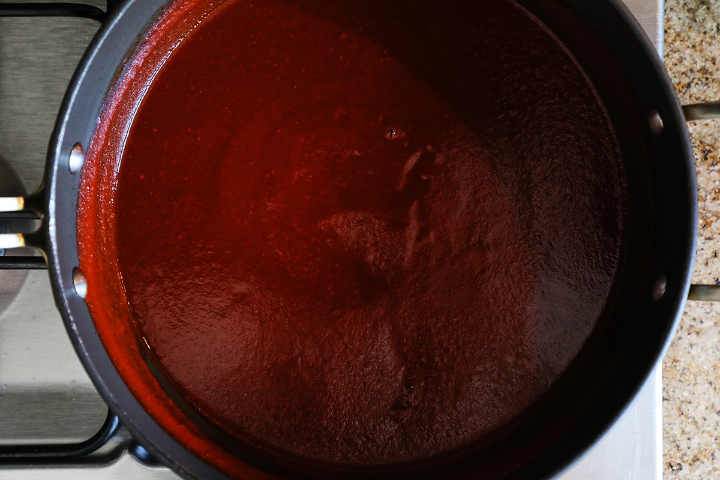
Turn the heat to low then simmer the salsa for 30 minutes until it thickens. At this point, the sauce will coat the back of a spoon without being too runny.
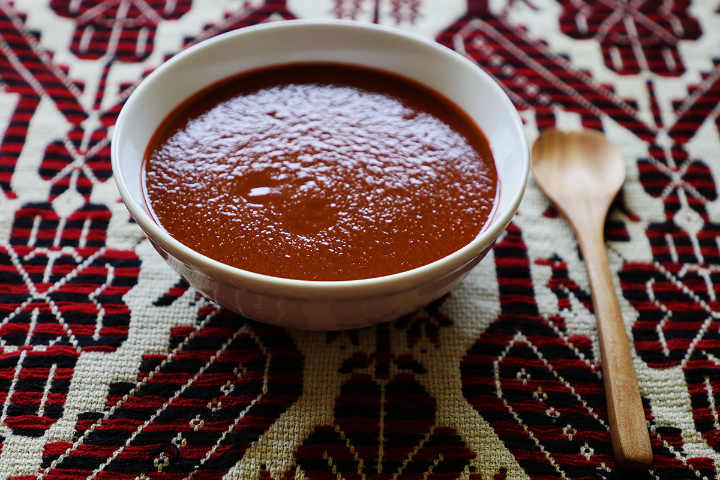
The salsa will take on a beautiful dark red color during simmering. Looks delicious, doesn’t it?
Rest the Salsa for Best Flavor
Let the salsa rest for at least 2 hours before serving to allow the flavors to come together. Try not to skip this step. Resting 4 to 6 hours gives even better results.
Adjusting the Salsa
- If the salsa is too thick, add ¼ cup of water at a time until the desired consistency is reached.
- If the salsa is too thin, simmer until enough water has evaporated until the desired consistency is reached.
- If you find the salsa to be too bitter for your tastes, add 1 tablespoon of sugar to reduce the bitterness.
Equipment needed:
- Knife
- Cutting board
- Saucepan
- Blender
- Strainer
- Mixing bowl
- Kitchen spoon
Provecho! Let us know what you think of this recipe in the comments below.
Guajillo Chile Salsa Recipe
Ingredients
- 16 guajillo chiles also called chile cascabel ancho
- 4 cloves garlic
- ¼ cup chopped cilantro
- 3 to 4 cups water
- 2 tablespoons cooking oil
- salt to taste
Instructions
- Remove the stems, seeds, and veins from the chiles. Discard.
- Peel the cloves of garlic.
- Chop the cilantro. You can use the stems.
- Put all the ingredients in a pan.
- Add just enough water to cover the ingredients, about 4 cups.
- Bring the water to a boil then reduce the heat to low.
- Simmer for 1 minute then turn off the heat.
- Allow the ingredients to soak for 15 minutes. The dried chiles will reconstitute at this time.
- Pour all of the ingredients including 2 cups the soaking water into the blender.
- Blend until smooth, about 2 minutes. Add a little water if needed to blend.
- Strain the mixture into mixing a bowl. Discard the paste that remains in the strainer.
- Heat 2 tablespoons of cooking oil in your saucepan over medium heat then add the strained salsa and 1 tsp. salt.
- Turn the heat to low. Add up to a cup of soaking water to get the desired consistency.
- Simmer the salsa for 30 minutes until it thickens. The salsa will darken in color during this time.
- Taste the salsa and add salt if needed to get the desired taste.
Notes
- The flavor of the salsa will deepen if you let is rest for a few hours before serving.
- If you find the salsa to be too bitter for your tastes, add 1 tablespoon of sugar to reduce the bitterness.
- This salsa freezes well. Portion it in freezer bags and it will keep for up to 2 months in the freezer.
Theresa says
Can this salsa be used on beef tacos? I made it. Tasted it. And im wondering if it pairs well with tacos
Douglas Cullen says
I think it would work well with beef tacos. Give it a try and let us know. Cheers!
Bob says
“Yield 8″… 8 what? Cups, ounces, years?
Rhyannon Ashford says
Servings. The amount of water you use, the size of your chiles, and the amount you reduce the sauce will all influence the physical measurements, but the serving size of 2 chiles and half a clove of garlic per person remains the same.
B. Scott says
Can this salsa be served with just tortilla chips ? Like a salsa?or is it used as a condiment for tacos etc?
Adriana says
Can dry cilantro work in substitute for fresh cilantro?
David Christy says
Since the guajillos aren’t toasted, I don’t see how they might become bitter. Am I missing something?
Dan Pallay says
Is there any particular reason you don’t just scrape out the peppers and leave the skins out of the blender, I was told the skins are what’s bitter?
Douglas Cullen says
The blending and straining process gets most of the tough outer skin. Guajillo chiles don’t have much meat on them. Even after reconstituting, it is difficult to scrape the flesh out.
Marcel says
These seeds from the Chile’s can also be saved. Toast them in a medium hot dry pan, until slightly browning, together with some coriander seeds and some cumin seeds. Then ground them and use them in this salsa or save it for some other salsa. It gives a very nice taste.
Robert Sherry says
GREAT Idea!!!! One I’m going to try. Great use of a part of the chili not normally used in this way. And the toasting of the seeds adds another depth to the flavor!! That’s thinking out of the box!!
Raylin Hayes says
Can this be made with fresh guajillo peppers instead of reconstituted dried peppers? I’d love to grow the peppers since I love this sauce!!
Lauren says
When pouring the boiled ingredients in the blender do we take 2 cups of water ADDITIONAL to the 4 cups or do we take the ingredients “dry” (without water) and then add 2 cups water? Thanks!
Robert Sherry says
In this recipe, only a total of 4 cups of liquid is required. Do not add additional water unless needed at the end while thickening the salsa. i.e. Salsa is to thick and no soaking water remains to use.
As the recipe says, “Pour all of the ingredients including 2 cups of the soaking water into the blender.” The soaking water is the 4 cup total of water used in the recipe. So don’t add more then the 2 cups of the soaking liquid unless the salsa comes out to thick. If the salsa is to thick you can then add some water (use the soaking water if any is left from the original 4 cups used in soaking and reducing. After reducing the salsa, you may only have about 1 cup soaking liquid left (you lose water during the soaking and reduction processes and you’re using 2 cups soaking water already) so some tap water could be used to thin the salsa. I hope that complicated answer to a simple questions helps. Chef Robert. S… :)
Nick says
How long will this keep in the fridge?
Dan says
Do you have any idea how much weight of fresh quajillos this recipe would have? I’m currently harvesting them, but the ones in my garden are quite a bit smaller than the dried peppers I see in the store, and I’m not sure how to work out an equivalent. I assume there’s no reason to dry and reconstitute them in this case, but please correct me if that isn’t right. Thank you
Douglas Cullen says
I am not sure there is a direct equivalent due to the different flavors of fresh and dried chiles. This recipe would be very different using fresh chiles. I would recommend drying your chiles and using them as shown in the recipe. Homegrown chiles always have a superior flavor. Hope this helps!
Jeff Iskierka says
Made this today. Absolutely the best. Wanted for over the Tamales we made. Chose this over your other sauce to keep simple and more focused on chile taste. Exactly what I was hoping for. A must make again. Slight bitter taste was mellowed by a pinch of baking soda while simmering. I seen it talked about and reminded me of granny using a pinch in her cream of tomato soup from whole tomatoes. A pinch worked wonders. Can’t wait to try more of your sauces and meals. Spot on!!!!! Thanks for sharing! Jeff
Douglas Cullen says
That’s awesome! Thanks for letting us know and please let us know how your other dishes turn out. Cheers!
Judy Crawford says
Can this sauce be frozen?
Jupiter Rios says
Sauce turned out delicious and as it cooked it takes on this silky beautiful red color that my Aunt from Guanajuato would prepare for us as young children.
Douglas Cullen says
Awesome! I am glad you liked it!
Lu Schneider says
Love this salsa i added 2 chilies puya to my last batch
Cathy Cullen says
This is just what I was looking for. It has that nice deep Guajillo flavor. Thank you!
Emma says
Es mejor usar caldo de pollo, o agua en lugar de el agua donde se hidrataron los chiles, porque eso le da un sabor amargo.
Dean says
Just came back from a month on the coast of Oaxaca where 125cc motos are everywhere, kids are free-range, and Guajillo is king. Haven’t made this salsa YET but mainly wanted to leave a comment to say that the advertising on this web page is 5x to 8x overboard. Chill out, share your learning, join the world community–you don’t need to go to the grave with 20s hanging out of your pockets. (I’ll report back when I make the salsa.) Good day!
Molly says
It is a free website Dean, lol. Beggars can’t be choosers
Allyson says
This salsa is excellent! And so easy! I’m thinking it would also be good as an enchilada sauce or a marinade. I couldn’t tell any difference between this and the ones where you toast the chilis. I think I’ll boil everything from now on!
Carol Montag says
This is very labor intensive. As well, the sauce stains everything, from wooden spoons to spatulas to anything it touches. Unhappily, it is one if the most boring sauces I have ever tasted.
I would suggest doubling the garlic, adding a green herb, like thyme and parsley, definitely a T of sugar.
That might help, but not enough for me. I won’t make it again
Kathy chase says
A different kind of salsa for me. I liked th flavor! I think this would be an excellent sauce for lack beans!
Camilla M Coy says
Using the soaking water is what imbues the bitter taste. You should never have to balance our bitterness by adding sugar to a salsa. No way! Use plain water.
Darnell Seper says
Give That Man Some Bacon
Robin says
I am not sure what I did wrong – I followed the recipe – or what else may be going on (different peppers being sold as Guajillos, different tastebuds, different alloys in pots???) but this sauce turned out absolutely terrible for us. My husband is a very non-picky eater and Portuguese and likes almost most foods, especially those with peppers, but this made him make a grimacing face like, “What the heck IS this stuff?!” and not in a good way.
MarJan says
Due to genetics, to some people (estimated to be somewhere between 4-14% of people in the US) cilantro tastes like soap instead of the fresh, citrusy, and slightly peppery, flavor the rest perceive it as. If your husband is one of these unfortunate people, I can imagine he would make such a face. If you are not sure if this is the problem, (in other words, if he has not eaten cilantro before) have him taste some cilantro all by itself. If he is one of those people, there is nothing to be done other than avoid cilantro. Note that if a recipe calls for coriander seeds (those are the seeds of cilantro): you can still use it even if you dislike fresh cilantro as the flavor is different. Flat-leaf or Italian parsley is the most common and readily available option to replace cilantro in most dishes, although Thai basil or dill is used in some dishes (probably not so much in Mexican style salsas, or use ground coriander and add a drop or 2 of lemon or lime)
Sonya Teffertiller says
Is there anything I can replace for the cilantro?